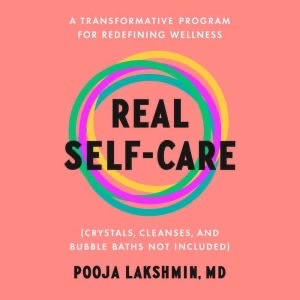
One of my favorite new books focused on self care is Real self care by Pooja Lakshmin. If you’ve heard/seen me speak, or read my book, you know my ambivalence about self-care. It’s essential, but… I mentioned one of Lakshmi’s strategies at my talk at the LJ & SLJ public library youth services leadership summit in March, which I’ll expand on soon.
Taking care of ourselves is vital. Otherwise, we cannot help others, whether those are family, friends, colleagues, or our communities. Corporations are cashing in on self-care as the newest money-making wellness craze. Anything to make a dollar, right? The global wellness industries targeting women was valued at $4.4 trillion in 2020. And, instead of improving working conditions and organizational behaviors, as well as committing to systemic changes to upset the dominant paradigm, many workplaces don’t acknowledge their role in creating toxic cultures. Institutions/organizations escape accountability for their actions (or non-actions) by promoting wellness and self-care to their workers, without backing up their theatrics with actual changes like flexible work, subsidized support for caregivers, or safe/brave spaces where we can calm down after anxiety attacks in the workplace. And self-care is something we do on our own time, at home, to recover from the daily indignities, betrayals, micromanagement, micro aggressions, and other fun things happening to us in our workplaces.
Lakshmin says that real self-care is “radical work.” And she provides a healthy framework for crafting an individualized approach to your self care. She says that self-care that is not aligned with our personal values does us harm. Her program requires us getting real about our values and priorities.
She wrote: “…our true selves are located in our daily choices , and when you use faux self-care as a coping method for escape, you don’t have to make any real world decisions at all.” Escapist self care isn’t healthy. It’s a short term solution that doesn’t promote growth, healing, resilience (another concept I’m ambivalent about).
If human touch is highly valued, then a monthly massage aligns with your values, and hence, is a solid way to restore your mind, body, and spirit. If you’re sensually oriented, then having aromas of lavender, bergamot, and/or lemon wafting through your space jibes with your values. Lakshmin proposes that when we thoughtlessly pursue self-care activities that don’t mesh with our priorities, then we’re sabotaging ourselves.
Those aren’t even the best parts of her work. She talk about how looking for hacks and shortcuts to give us more time isn’t useful when we use those extra minutes or hours to add more work to our plates. We’re not resting enough. Doing nothing enough. She indicts the “American Dream,” patriarchy, white supremacy, and capitalism as elements contributing to our experiences of burnout, overwhelm, and mental illness.
Something I emphasize in my presentations about trauma-informed and trauma-responsive libraries are boundaries as self-care. This is not a new notion, but it’s something I arrived at by talking with other librarians about how to do this work well, without letting the emotional labor and invisible labor kill us. Saying no is a great boundary, but not one that many of us have agency to use as a definitive response to bosses, managers, employers, clients, etc. Lakshmin offers a solid alternative, the pause.
“Your boundary is in your pause– you can say yes, you can say no, or you can negotiate.” This practice disrupts our good girl/good boy cultural programming to say yes to everything and extend our energy beyond our capabilities.
I hope my review sold you on reading this book. It’s perfect for those just learning about self-care because it may set you on a healthy part from the start. And it’s perfect for those of us who’ve read dozens of self-care/self-help books because Lakshmin’s suggestions are sharp and effective.

 Rebecca Tolley