library swag, sustainability, & value [a rant]

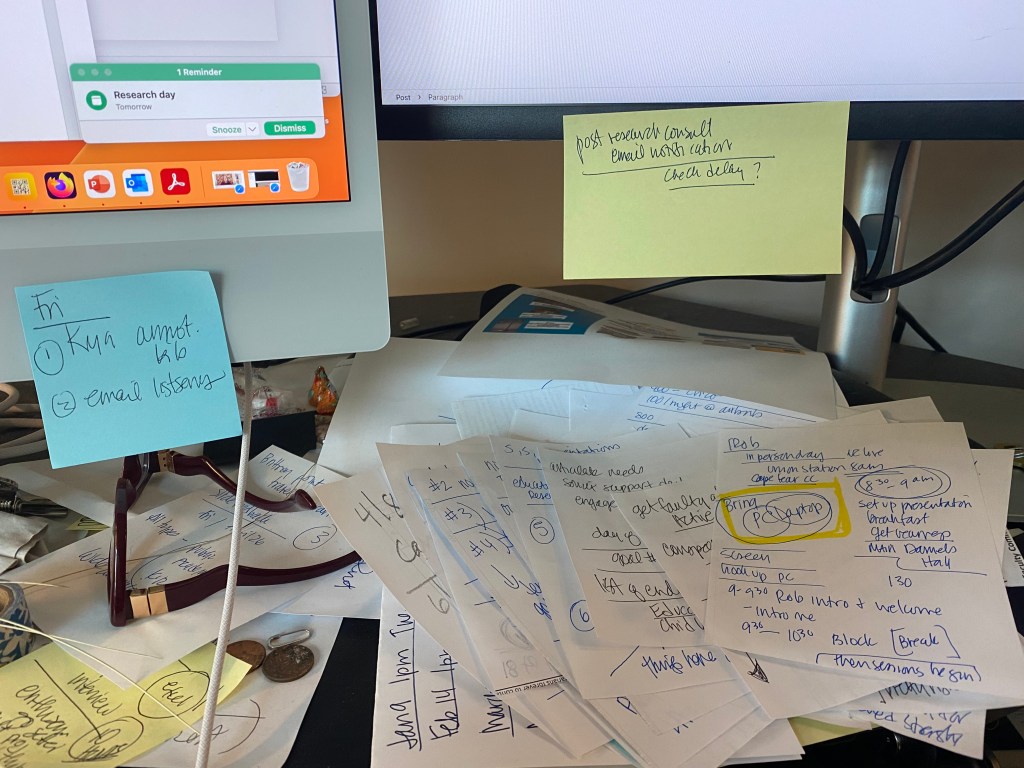
Here’s a look at my desk, littered with scrap paper on which I jotted notes (thanks to my ADHD brain). Didn’t note the source of the article I read that spurred the following thoughts on sustainability and swag.

First, about these scraps: Library workers, at least in my experience, were always concerned with sustainability. At 13, as a volunteer library worker, I was asked to chop paper into slips with the paper cutter, so that service desks could write call numbers for patrons1 or patrons could jot those down themselves.

Photo by Madison Inouye on Pexels.com

That said, somewhere, recently I read a critique of swag and how that industry creates cheap, mass produced, sometimes single-use-plastic objects that people toss in the trash.

Why give another person crap? Anyone versed in critical thinking may arrive at similar conclusions about this issue. It likely drives the DIY/handmade gifts groundswell.

But better yet, how does this relate to trauma-informed or trauma-responsive libraries?

Safety: do libraries want to encourage people to use plastic, when there’s clear evidence that plastic is killing us and our world? Why add to this problem?

Can libraries explore alternatives to plastic library cards or ID cards? A saving grace is that they are used multiple times. I remember when library cards were paper stock with a metal piece that circ workers stuck in a machine that franked the card # onto the book’s card. I won’t explain the details of that workflow process; it’s a bit hazy in my brain and I don’t want to share incorrect information, though I remember being a cog in that system decades ago.

Trust/transparency: should our patrons trust us when the swag we give them is directly and indirectly affecting their health? Gifting mass-produced, plastic swag to our communities seems like a thoughtless practice in which we jump on the bandwagon of providing prizes and favors for a generation who received them at every birthday party they attend? I’d rather give each kid a $10; in the end it is cheaper.

As a library worker, how do I feel when my efforts and contributions are rewarded with cheap trinkets (aka symbolic intervention)? Gone are the days when companies gave cash bonuses, gifts of quality, or fancy, multi-jewel-operated watches? Lapel pins seem gendered or role-bound and most likely worn by people sporting suits. Front-line workers rarely wear suits.

Do library workers trust companies when efforts at rewarding us fall short?

There’s trend of organizations using swag to recognize employees and increase morale. For the most part, the google results reflect content created by the swag industry propping up these practices and pushing organizations toward solving all their symbolic intervention problems via spending and consumerism.

Photo by Quang Nguyen Vinh on Pexels.com

Also, if our guiding documents, like mission, vision, and goals specifically cite sustainability, and we give out plastic swag, that creates a cognitive dissonance, that the library talks the talk, but doesn’t walk the walk… so if they’re being duplicitous or untruthful about one thing, can we trust them, ever?

Speaking for myself, I prefer a personal note, and a HBR article supports my choice of “symbolic interventions”:

To make sure your symbolic interventions are well-received, it is important to pay attention to the details. For example, in our studies, the letters of appreciation were signed in ink by a direct manager and mailed to employees’ homes. A blanket email would no doubt have been much less effective.”2

Also, how far can we trust an organization lacking long-term thinking? Plastic is a short-term convenience. I know, I’m probably sounding “shrill.”

Empowerment, voice, & choice: let me choose my own gift. Don’t force something meaningless on me. This reminds me of when servers at restaurants “help” me by placing a straw in my glass. They assume everyone needs a straw. I get you’re being hospitable, but it’s my choice to use a straw or not. Yes, there are many disabled people who require straws, and I’m happy they have them to assist their consumption.

Cultural issues: Environmental racism. All the trash-bound swag ends up in landfills situated in areas mostly adjacent to where BIPOC people live. Or poor people, who are typically BIPOC. In my city, the landfill site is on the southeast side of town, which is poor.

Mostly, I just think that giving people crap is thoughtless and meaningless.

It is performative, lacks integrity and authenticity.

It seems that some libraries are interested in being intentional, like with planning and assessment, policies and procedures. Shouldn’t libraries go the extra mile to be intentional about swag? Have a statement like:

Our library intentionally reduces our impact on the environment by not giving students swag: plastic bags, wrappers, & packaging, single-use pens, and other trash-generating items.

Photo by Tom Fisk on Pexels.com

Sure, it could be economically-driven. With rising inflation costs and diminishing library budgets, why waste money on things people throw in the trash?

And look, here’s a sustainable swag self-evaluation for library workers.

But, there’s also a cost to buying “environmentally friendly” items. Like one beverage container to rule them all.

I love tote bags, but I own twenty or more, and when you consider how dirty manufacturing them is? Ugh. I’m part of the problem. According to a 2018 study, I’d have to use my ONE organic cotton toes bag 20,000 times to “offset its overall impact of production.”3

It seems like we’re damned if we do, and damned if we don’t. With that in mind, feeling powerless is inevitable.

However, it’s not up to one person to make a difference. This is a lie we’re taught. Collective action is necessary for changes addressing systemic issues like environmental racism.

  1. I’m most comfy calling people who use libraries, patrons. Users is pejorative. Customers is yucky. However, I don’t like the assumed power differential that patron, like “patron of the arts,” implies… that their funding of libraries entitles them with power over library workers. ↩︎
  2. https://hbr.org/2021/03/research-a-little-recognition-can-provide-a-big-morale-boost ↩︎
  3. https://www.nytimes.com/2021/08/24/style/cotton-totes-climate-crisis.html ↩︎

when the stars align

Photo by Marek Piwnicki on Pexels.com

One of my long-standing and favorite professional practices is reading books, reviewing them, and having those reviews published. I’ve dozens on my CV, and while I’m a full professor with no real need to continue “publishing” I can’t stop with the book reviewing because it’s so important as a professional practice.

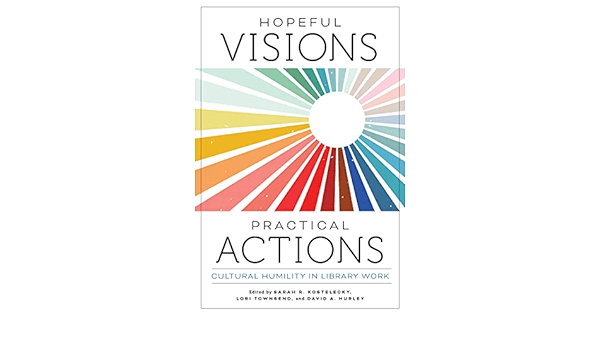
This month I reviewed Hopeful visions, practical actions: Cultural humility in library work for Public Services Quarterly. I’ve heard of cultural humility and cultural competence, but those are not the same thing.

And when I spoke at the Library Marketing Conference this month I mentioned ACRL’s cultural competence values as a way that the DEIA piece aligned with the sixth trauma-informed framework principle: cultural, historical, and gender issues, but actually regret doing that because now I’d change that to cultural humility. I’m not steeped in the ACRL framework like some college/university librarians are; just peripherally aware.

Photo by Akshay Nayak on Pexels.com

I learned from the book that cultural competence fails to analyze structural and institutional roles and hold them accountable for harm. Clearly, cultural humility promotes that essential component of structural and institutional accountability.

Cultural humility aligns perfectly with the sixth trauma-informed principle.

There are three or four main points to cultural humility:

  • don’t be defensive
  • recognize other pespectives
  • practice critical self-reflection
  • hold institutions accountable

Anyway, I’m excited that I know this concept and will incorporate it into my learning, practice, and presentations. While referencing the sixth principle I talk about things like segregated libraries in the Jim Crow South, Native American Boarding Schools and their deployment of education for cultural genocide, library buildings being named for white men (sometimes enslavers) as reasons why people mistrust institutions, including libraries. On a more positive note, I stress the way that libraries serve as sanctuary for LGBTQIA+, immigrants, the unhoused, etc.

empathy vs. tough love

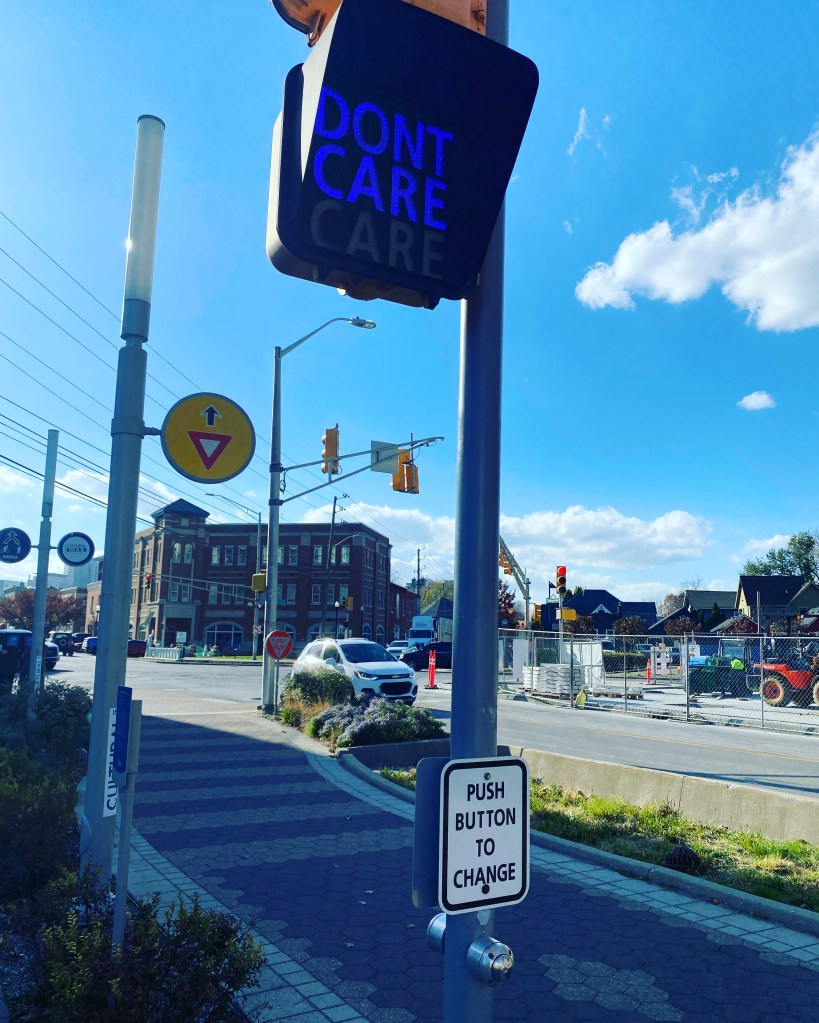
Care/Don’t Care, Indianapolis Cultural Trail (Mass Ave.)

Last week I presented at the Library Marketing Conference in Indianapolis, IN on using the trauma-informed framework as a strategy for libraries’ marketing and communication practices.

It’s an area I omitted, accidentally, from my book, which now seems like a terrible oversight since I worked for five years as my academic library’s marketing and communications librarian. And yet, it seems that many people working in library marketing and communications are coming around to empathy, kindness, and care, without the trauma-informed framework.

That was delightful. So I confessed to my audience that I didn’t think I’d tell them anything they didn’t already know. But presented the six principles as a checklist of sorts that they could use in their crisis communications.

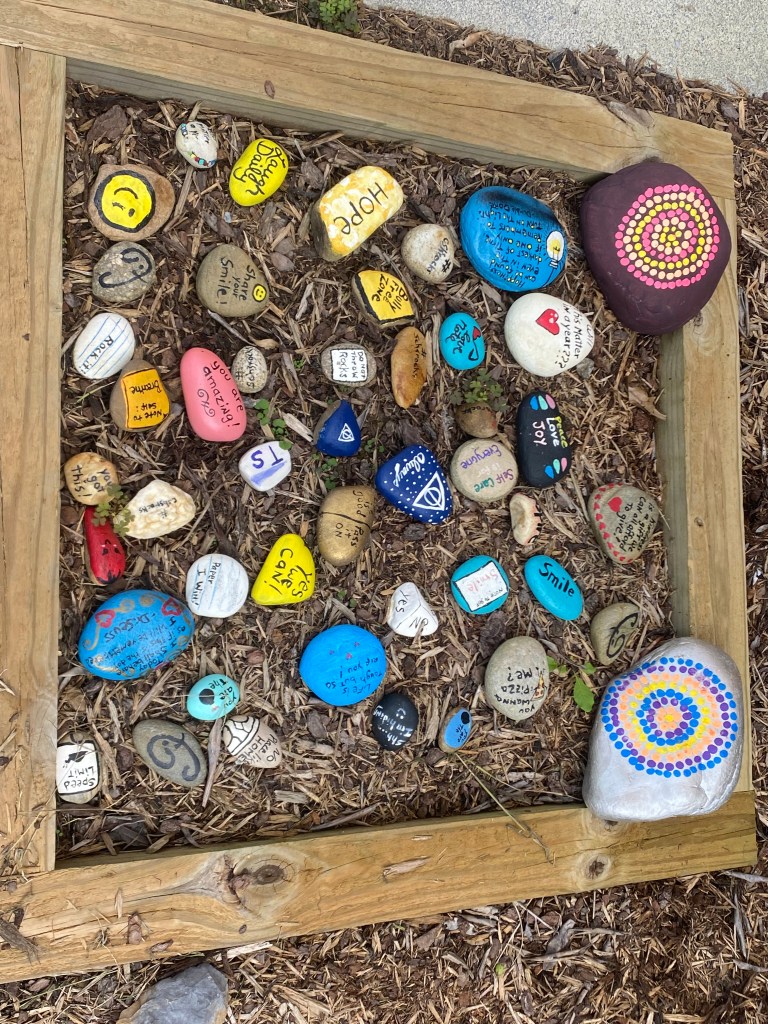
Painted rocks outside Clemmer College of Education, East Tennessee State University, Johnson City, TN

Many people realize that we’ve had a rough few years/decades/centuries; that now is a time for kindness and caring for each other.

After my presentation a person approached me and we spoke about how it the empathy vs. tough love binary seems like one of the divisions our country experiences. While it’s certainly not as simple as some people have empathy and some tell others to “suck it up and move on,” sometimes it feels that way. How do we get perceptions round vulnerability and strength to widen?

the ubiquity of trauma

Photo by cottonbro studio on Pexels.com

Understandably, there’s resistance to coloring everyone with the same trauma brush. It’s likely that many people don’t intentionally embody the victim identity, or acknowledge it, either. So they don’t want to be treated “as if.” “As if they’re lifelong victims. Viewing everyone as victims, especially if they’re an historically marginalized person, is paternalistic.

In spite of that, my feeling is that once we realize everyone experiences some level of trauma, that we all suffer, that commonality creates a bridge between “us” and “them” or “us” and “the other” who are always easy to dismiss or oppress or insert any word here that works.

Photo by Jacob Colvin on Pexels.com

We have a bridge and that bridge builds empathy and when we operate from a place of empathy and kindness and if not real, but simulated “understanding”, that change in intention and change in approach/philosophy in US is felt by those with whom we interact, support, etc. It is authentic. We connect with others in genuine ways, not in prescribed transactional modes inflected with our emotional labor.

This week I’ve pondered about generational/historical trauma. Mostly when I think about it, I consider the effects of colonization on Indigenous people, the effects of enslavement on the enslaved, and the effects of war, genocide, violence upon those most dispossessed by those events. Or the trauma of being an 18th century seaman on The Wager, or exploring the North American continent as part of the Corps of Discovery Expedition.

For the most part, I consider trauma in the present sense, like how 9/11 affected everyone, how the COVID pandemic affected everyone, and how the continued, systemic lynching of Black people affected everyone.

But historically, growing up in the 1970s and 1980s, my every-present fear was of nuclear war. My child has ever-present fear of gunmen coming into their school and shooting/killing everyone.

Each generation has their own collective trauma to bear. As a parent though, I, too feel the fear and unease everyday that my child enters the public school building.

This week I’m reading Ninth Street Women, about abstract expressionist artists working in mid-century United States. Mary Gabriel peppers her prose with trauma. I’m so far away/apart from both the Silent generation and the Greatest generation (which my sets of grandparents belonged to, and which the book deals with), that my knowledge of their generational trauma was nil.

By reading about art I’ve discovered amazing contextual information about mid twentieth century that I never knew. World War 1 and the Great Depression and World War 2 and the bombs dropped on Hiroshima and Nagasaki and the years of terror during the McCarthy years all affected those generations. I don’t think they spoke about how those events affected them. Perhaps they wrote about them. They definitely painted through their trauma. And they sure as heck drank their fears and anxiety away.

Gaining the historical knowledge that trauma and how it’s expressed and felt in our culture/society is constant, but the source changes, makes me feel some kind of way. I’m struggling to pinpoint what that feeling is, though. Definitely more empathetic towards earlier generations for whom I feel great ambivalence because their legacies we inherited are so fraught.

Photo by Pixabay on Pexels.com

Another somewhat allied belief that cropped up in my mind is that we all feel like we’re living in the end times, the last days. That the world has gone to shit and we’re fucked. Those bombs in Japan affected generations of people globally. The threat of nuclear war, climate change, and other situations haunt us; we cannot escape them. My evangelical upbringing informed the majority of my “end of days” childhood mentality. So this dynamic is part of my identity whether I claim it or not.

how do caring organizations feel to library workers?

Photo by Oleksandr Canary Islands on Pexels.com

Answering this question will be different for everyone. No two libraries are alike. No two or three libraries employ the same demographics or experience the same organizational behaviors, and so while we can say that “Caring organizations feel safe to library workers,” or “Caring organizations feel welcoming and supportive to library workers,” what that looks like or how it manifests within the organizational dynamic differs greatly.

Given that, what actions can library administration and library leaders take in their creation of a caring organization? Obviously, my first answer is “look to the six principles of trauma informed care.” And yes, those principles guide the majority of my responses.

Safety is critical. I’ve worked with people who shirk in meetings because they expect personal attacks from more senior individuals. When leadership allows bullying, blame shifting, and other negative elements to take root within libraries, library workers don’t feel safe, they experience very limited trust, if any, and they realize that their voices are unimportant. That’s how a culture of silence and complicity permeates some workplaces. And how an organization feels uncaring to its workers.

Feeling cared for is relative. We all respond to different means. Having an extra day off is nice. Since COVID my university has granted us one or two paid days leave in addition to the time we accrue and paid holidays. Those were appreciated, but not every library or its parent organization can extend that kind of largesse to workers.

Photo by fauxels on Pexels.com

Isabel Espinal suggestions that microaffections and microaffirmations can go a long was in reducing the chilly work environments that POC experiences. Libraries maybe too sterile, too brisk, too “professional.” And as a Latinx person the lack of personal warmth in libraries affects how she feels at work. She recommends that we warm up the library for POC with pleasantries. Pleasantries create connection and caring.

Showing appreciation equitably is another means of spreading care around to everyone working in libraries. It seems as though one of two of the superstars or favorites receive all the accolades from leadership. Library leaderships shouldn’t let opportunities for everyone’s strengths to be acknowledged publicly pass them by.

Photo by Kate Trifo on Pexels.com

My library has always been broke, so while there was never an abundance of swag or catered events celebrating library workers, there were times when we felt appreciated. When we were celebrated for no special reason by the dean treating us with a catered sundae bar. Food in workplaces can be tricky (as I wrote a few weeks ago), but, for me, it comes down to intent: Was leadership intentional about demonstrating their care and thoughtfulness for workers? Does leadership care about the impact of their actions? Are library workers invited to the table for the main event, or are they emailed when leftovers are available?

you earned it, take your leave time

Photo by Jeremy Bishop on Pexels.com

Weekends and evenings and paid time off brought to us by generations of successful workers rallying for basic human rights in the workplace should be enjoyed, fully.

What kind of culture of self-care exists in your library? How encouraged are you by the higher ups to take annual leave, sick leave, if those are available to you? The tone library leaders set around taking leave time that you earned is a crucial element of modeling self-care and creating a culture embodying those principles.

Photo by Pixabay on Pexels.com

I’ve know library workers whose supervisors questioned every hour of sick leave they took, ultimately remarking that they were using too much sick leave each month. Perhaps it’s a difference between managing, ahem micromanaging people, and leading them. Frankly, managers making statements along this vein seems illegal to me, but I’m not a lawyer. Similarly, supervisors telling their workers they need to be more “present,” is just as troubling, especially after commenting on how they tend to use their leave time rather than accrue hundreds and hundreds of hours, never calling in sick, never taking a break from the workplace.

What is presence in the workplace, anyway? And, is it achievable? My body may be physically present, but where is my mind? And I may be “always there” ready to jump in and help out, or ready with a quip or retort, but how authentic am I? I digress.

Photo by RDNE Stock project on Pexels.com

Granted, many libraries are short-staffed and library workers wear dozens of hats, thus feeling guilty about taking your earned time off may be valid for anyone. However, for library workers to be their best at work and perform the emotional labor expected, they must have time away from work to restore equilibrium, find joy, and break from the minutiae of demands on their brains.

Balance may be difficult to attain, but it is essential for our self-care and wellness.

creating a culture of wellness in libraries around food & eating

Photo by Tim Mossholder on Pexels.com

Who hasn’t struggled with disordered eating? American culture foments it with our advertisements about food and sex and food and fitness and food and thinness/obesity.

How does disordered eating feed into wellness this month? And how do our library workplaces create cultures of wellness for those with food trauma?

Food trauma occurs with specific types of food and usually stem from an event someone experienced that causes them to feel anxious, insecure, and possibly surveilled when eating.

Someone with a high ACEs score may be more likely to experience anorexia nervosa, bulimia nervosa, to being eating disorder. Caitlin Beale describes several types of food trauma:

  • restriction or deprivation
  • food insecurity
  • forced eating
  • sensory trauma
  • misunderstanding of neurodivergent behavior
Photo by Kaboompics .com on Pexels.com

It’s very easy for those with disordered eating to be misunderstood. When we avoid parties, potlucks, or receptions, or situations wherein food is present, our absence may be noted. Absences around team eating and socialization can be perceived poorly by supervisors. They may request that you be more “present” and appear at team-building events. And unless we disclose about our disordered eating and why workplace events with food may unsettle us, our absences could be counted against us or viewed as our not participating in team events. Or that “so and so” is a curmudgeon and doesn’t like to socialize with everyone else. When, in fact, the food may be the issue, not the emotional labor socialization entails.

Photo by Maria Orlova on Pexels.com

Certainly many people are aware of how loaded that baked potato may be. Our greater awareness about dietary differences and how we accommodate gluten-free, vegan, vegetarian, pescatarian, etc. preferences is essential in promoting inclusion and belonging in our library workspaces.

Creating an affinity group in which library workers with disordered eating can support one another, and share and crowdsource strategies and tactics for dealing with this issue in the workplace is one idea. Convening a monthly trauma-informed/responsive book/information group with library workers may be another idea for stimulating conversations about food-related experiences.

This is one area in which trauma informed/responsive leadership can raise awareness of food trauma in the workplace, discuss this sensitive issue, take an environmental scan of food issues affecting their specific demographics, and model thoughtfulness in this domain.

Somewhat unrelated food for thought: public library workers are involved with summer feeding programs in their communities, which seems like another example of job creep, of library workers being all things to all members of their communities. More and more, library workers are expected to fill all the gaps that our social infrastructure is failing.

for wellness: add a plant or three

I think about big changes verses small changes. What is more effective? A big change would be grand and telegraphs CHANGE, but sometimes that can be misleading.

Believing that change, lasting change, is related to major investment of time or personnel is incorrect.

Research indicates that small changes of habits can be very effective for embodying discipline and nudging our thoughts and behaviors in directions that leave us feeling calm, refreshed, and supported.

My immediate office space boasts a plethora of plants. When campus community members visit our environs, they’re pleased by the welcoming sight of pathos, inch plant, dragon tree, Norfolk Island pine, and others in our otherwise

library work and wellness

As someone who promotes boundary-setting as an essential element of self care, I am pleased to see that August is National Wellness Month, and I’ll be posting about wellness during its span.

Photo by RF._.studio on Pexels.com

What healthy habits drive your library work?

Opting out of gossip?

Avoiding dramatic situations?

Taking all your federally-mandated breaks–including two 15-minute breaks and an hour lunch break?

As a trauma-informed and/or trauma-responsive library worker, modeling wellness in the workplace may be within your wheelhouse.

Wellness includes work/life balance. That slash [/] between the two words is a powerful symbol of separation. Of boundaries. Affirming and embodying that separation can be tough. My tendency to ruminate over past and present and future work happenings in the evenings and weekends at home robs me of my precious free-time and also makes focusing on my family challenging.

A few weeks ago I responded to an email late on a Friday night, after our traditional workday ended. I included a statement about the uncommon late email, and for others to respect their work boundaries and not feel pressured to read or respond to any email outside of their paid work time.

cognitive dissonance

Photo by Pixabay on Pexels.com

When I speak about trauma-informed/trauma-responsive library services I mention cognitive dissonance when it comes to library security and/or law enforcement presence in libraries. I’m white. Seeing armed cops patrol my public library unsettles me. I’m on the fence about having security guards babysitting empty academic libraries, too.

However, many library workers experience threats, harassment, bullying, and other kinds of violent behavior from those whom they serve. Library workers often want security/law enforcement in the building because that’s not our job.

Photo by Tima Miroshnichenko on Pexels.com

Interestingly, it WAS. Historically librarians were hired to curate and discipline those who didn’t follow rules. They were hired to enforce white supremacy in the white institutionalized library.

Yet, a lot of library workers’ workflow is interrupted by having to de-escalate situations, curb unacceptable behavior, and surveil the people using their spaces and collections to monitor how well everyone abides by rules.

Many people we support are black and brown people whose bodies and lives are surveilled. They worry about whether they’ll survive a “routine traffic stop.”

Photo by Vijay Sadasivuni on Pexels.com

Holding two conflicting ideas takes a mental toll on our well-being. Library workers need to feel safe. Library users need to feel safe. Those are similar ideas, but safety means different things to different people.

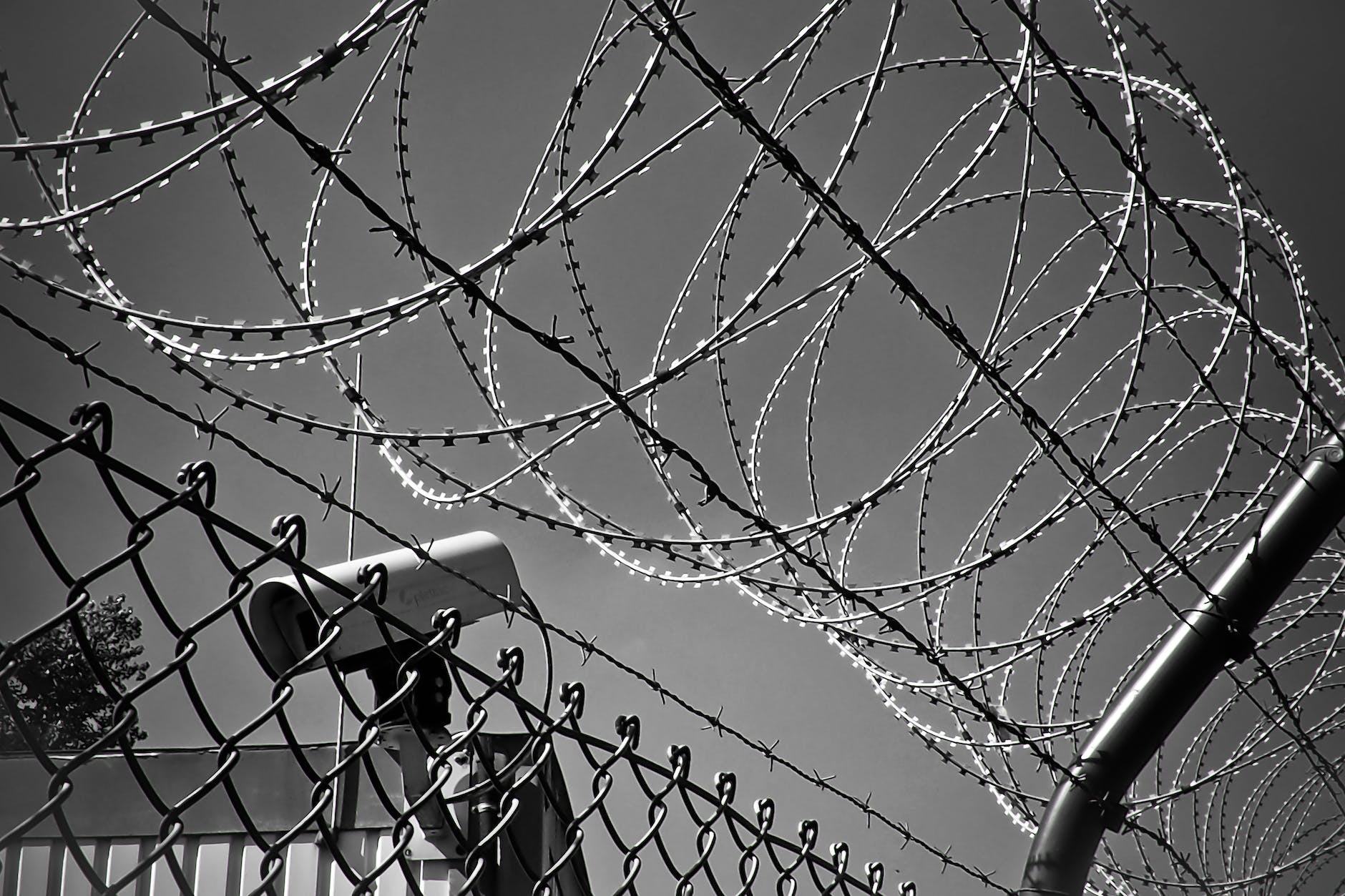
For some weeks now I’ve thought about the cognitive dissonance felt by prison librarians. Our professional ethics stress the right to information, the freedom of speech, and anti-censorship. Yet, prison librarians must balance those professional ethics with what their employer–a department of corrections, prison, juvenile detention center, etc.–deems a security risk. Information is restricted for prisoners, but SCOTUS guarantees their right to access of the courts, which is usually interpreted as access to a law library.

Photo by Pixabay on Pexels.com

Seemingly, there isn’t much we can do to resolve cognitive dissonance. Recognizing the conflict and accepting that it’s there is it. That’s part of Acceptance and Commitment Therapy. Just noticing the conflicting ideas when they pop up, and not judging them. It’s difficult. I want to solve problems, but some days I just notice and let those ideas float on. That’s some improvement over the dismay of learned helplessness, right?