Weekends and evenings and paid time off brought to us by generations of successful workers rallying for basic human rights in the workplace should be enjoyed, fully.
What kind of culture of self-care exists in your library? How encouraged are you by the higher ups to take annual leave, sick leave, if those are available to you? The tone library leaders set around taking leave time that you earned is a crucial element of modeling self-care and creating a culture embodying those principles.
I’ve know library workers whose supervisors questioned every hour of sick leave they took, ultimately remarking that they were using too much sick leave each month. Perhaps it’s a difference between managing, ahem micromanaging people, and leading them. Frankly, managers making statements along this vein seems illegal to me, but I’m not a lawyer. Similarly, supervisors telling their workers they need to be more “present,” is just as troubling, especially after commenting on how they tend to use their leave time rather than accrue hundreds and hundreds of hours, never calling in sick, never taking a break from the workplace.
What is presence in the workplace, anyway? And, is it achievable? My body may be physically present, but where is my mind? And I may be “always there” ready to jump in and help out, or ready with a quip or retort, but how authentic am I? I digress.
Granted, many libraries are short-staffed and library workers wear dozens of hats, thus feeling guilty about taking your earned time off may be valid for anyone. However, for library workers to be their best at work and perform the emotional labor expected, they must have time away from work to restore equilibrium, find joy, and break from the minutiae of demands on their brains.
Balance may be difficult to attain, but it is essential for our self-care and wellness.
Who hasn’t struggled with disordered eating? American culture foments it with our advertisements about food and sex and food and fitness and food and thinness/obesity.
How does disordered eating feed into wellness this month? And how do our library workplaces create cultures of wellness for those with food trauma?
Food trauma occurs with specific types of food and usually stem from an event someone experienced that causes them to feel anxious, insecure, and possibly surveilled when eating.
Someone with a high ACEs score may be more likely to experience anorexia nervosa, bulimia nervosa, to being eating disorder. Caitlin Beale describes several types of food trauma:
It’s very easy for those with disordered eating to be misunderstood. When we avoid parties, potlucks, or receptions, or situations wherein food is present, our absence may be noted. Absences around team eating and socialization can be perceived poorly by supervisors. They may request that you be more “present” and appear at team-building events. And unless we disclose about our disordered eating and why workplace events with food may unsettle us, our absences could be counted against us or viewed as our not participating in team events. Or that “so and so” is a curmudgeon and doesn’t like to socialize with everyone else. When, in fact, the food may be the issue, not the emotional labor socialization entails.
Certainly many people are aware of how loaded that baked potato may be. Our greater awareness about dietary differences and how we accommodate gluten-free, vegan, vegetarian, pescatarian, etc. preferences is essential in promoting inclusion and belonging in our library workspaces.
Creating an affinity group in which library workers with disordered eating can support one another, and share and crowdsource strategies and tactics for dealing with this issue in the workplace is one idea. Convening a monthly trauma-informed/responsive book/information group with library workers may be another idea for stimulating conversations about food-related experiences.
This is one area in which trauma informed/responsive leadership can raise awareness of food trauma in the workplace, discuss this sensitive issue, take an environmental scan of food issues affecting their specific demographics, and model thoughtfulness in this domain.
Somewhat unrelated food for thought: public library workers are involved with summer feeding programs in their communities, which seems like another example of job creep, of library workers being all things to all members of their communities. More and more, library workers are expected to fill all the gaps that our social infrastructure is failing.
As someone who promotes boundary-setting as an essential element of self care, I am pleased to see that August is National Wellness Month, and I’ll be posting about wellness during its span.
Taking all your federally-mandated breaks–including two 15-minute breaks and an hour lunch break?
As a trauma-informed and/or trauma-responsive library worker, modeling wellness in the workplace may be within your wheelhouse.
Wellness includes work/life balance. That slash [/] between the two words is a powerful symbol of separation. Of boundaries. Affirming and embodying that separation can be tough. My tendency to ruminate over past and present and future work happenings in the evenings and weekends at home robs me of my precious free-time and also makes focusing on my family challenging.
A few weeks ago I responded to an email late on a Friday night, after our traditional workday ended. I included a statement about the uncommon late email, and for others to respect their work boundaries and not feel pressured to read or respond to any email outside of their paid work time.
Recently I referred to someone’s “meeting the library family” with CRINGE. I wasn’t ready to share my thoughts about that term being used in a workplace/organization/institution, but some weeks ago I watched the docu-series Working: What We Do All Day on Netflix. Barak Obama follows up on Studs Terkel’s 1974 book of interviews with working people, today’s working people.
At some point in Episode 2: The Middle, Obama says something along the lines of “this is a family and folks look out for you…” And this is a total paraphrase from Luke: “When somebody says you’re in a family, usually that’s a bad job.“
I forget when someone in my workplace described us as “library family,” but it was early in my career. We “take care” of each other. Love each other. Words, but no caretaking from the powerful. Everyone working in the library was expected to take care of one person. You couldn’t say no. We were told via email to sign up for transportation shifts to take this person to physical therapy, the grocery store, feed their cats, run errands on their behalf, and it would be counted as part of our work time. We were told to visit this person in the hospital and see what items to fetch from their home for their use in the hospital. This person called their staff when they had a leak or an emergency at home. Their direct reports came to their home and helped them.
Maybe some people, somewhere have warm fuzzy feelings about their “work fam,” but I never have because my experience of that was manipulative and compulsory. And for a decade or so, I was the only person of my generation working amongst the librarians. They were cliquish and excluded me, even when I asked to join their writing group.
My first response to nearly every question is “Review The Literature,” but I haven’t in this case. I like to back up what I write with data.
If you’re on the job market and hear the library, the workplace, the organization, the institution referred to as a FAMILY, this is a red flag. The way I read it is: You/I am the child in this dynamic. You/I will be parentified. This is when parents expect children to be the caregiver. In the workplace, this means that all the sacrifices are made by you, because we’re a family. We’re tight. We’re in this together.
Surely some people, like those in marketing and PR, use this type of branding to signify some kind of down-homey close-knit feel, they’re selling a potential experience of familial warmth and belonging to lure in the unwitting and I believe that is disingenuous.
I think of Leo Tolstoy when I think of families. He wrote, in Anna Karenina, “Happy families are all alike. Every unhappy family is unhappy in its own way,” which I paraphrase as “every family is dysfunctional, some more than others.”
My families–birth and blended–failed me in a lot of ways that I’ve spent my adulthood recovering from. Invoking the “we’re a happy family” card, if you will, to describe a workplace clangs alarm bells in my brain. I love my birth and blended fam but I don’t have to like them. And I don’t have to love OR like my work fam. That seems like an idyllic dream. I can/do dream.
What’s unusual for me right now is the amount of television/streaming that I’m consuming. Loving The Bear for so many reasons, but it’s a great example of toxic kitchen workplaces. All the yelling, the screaming, the violence, whoa.
Some of the phrases that came up in seasons one were “You can’t start with fucked” meaning that when you inherit a fucked up organization, you’re bound to fail.
Another was “The chef was a piece of shit” regarding why Carmine experiences tremendous anxiety, nightmares, and what looks like PTSD from workplace abuse.
And the last thing, that I identify with most strongly is “A big part of the job is taking care of people.” And that makes me think that if you aren’t a people-person and lack empathy, then I’m not sure what workplace is a good fit.
Also picked up on a lot of “workplace culture” by watching FUBAR, the new Arnold Schwarzenegger Netflix series about a father and daughter who learn that they’re both in the CIA after he’s sent in to rescue her before retiring. Obviously, I don’t know how the CIA works. But some of the situations and humor visible in this show…. far-fetched, I’m sure.
Two of the CIA operatives are always “sack tapping” each other (not the father/daughter), which is such a vile bodily violation, omg. Still unpacking this show, but the people working together are bio and work fam, which promises (and delivers) fascinating dynamics and situations.
After nearly every talk/workshop/presentation I give I’m thanked by the organizer/facilitator for my vulnerability. Sometimes I feel as though I’m oversharing. But mostly, I’m just honest about the everyday mental health struggles I experience in my library workplace and how I establish boundaries with others to protect myself and my energy. Last blog, I shared about my library-induced panic attacks.
Here, a back channel exists in which check in with each other to learn about the “mood of the day.” Sharing this information with each other helps us pre-game meetings by taking anti-anxiety meds. Incidentally, centrally organized library back channels exist for BIPOC who want information about safe places where one can thrive: Greenbook for libraries.
Today I read Karina Hagelin’s “Surviving to thrive: creating a culture of radical vulnerability in libraries” which exists withinLIS Interrupted. I’ve co-presented with them and admired their work a great deal and was pleasantly surprised when I saw their essay in the collection. Karina inspires my professional vulnerability.
Yet, I’m also exhausted by remaining silent, pretending, and performing collegiality in the workplace. Those actions, or lack of actions, daily impinge upon my sense of integrity. Martha Beck and Gabor Mate both write about how both our integrity is tied to our mental/physiological health. They’re negatively affected when we revert to our socially constructed “good girl” “good boy” “good child” personas instead of speaking the truth.
Karina defines radical vulnerability as “a praxis and a strategy of sharing openly about experienced, identities, and satires that have been stigmatized and weaponized against us, in order to keep us quiet, small, and powerless.”
How often do you surface act? It’s part of the emotional labor that many of us are expected to perform daily in our workplaces, both with the people we help as well as our colleagues and administrators. Karina describes this as “forcing a smile during a challenging experience” when actually you don’t want to smile. You want to scream or cry or leave the space immediately. They also write that answering something as simple as “How are you?” is stressful.
We follow social scripts in our lives. We’re programmed to ask others “How are you?” and the expected response is “Fine, how are you?” Admittedly, it’s a struggle for me to answer this honestly. I’m usually not fine at all. Yet I don’t want to share how I’m really feeling for a variety of reasons. First, it’s a matter of privacy; it’s not everyone’s business. Second, I don’t feel safe sharing how I truly feel, especially with an abuser. Keeping my boundaries engaged takes so much energy and forethought. I spend some time fabricating a benign yet truthful answer when an abuser asks “How is your Monday?” My answer: “Well… it’s a Monday…” which answers vaguely, and truthfully, so I’m not lying or pretending, or performing collegiality.
Karina recommends we act in a manner that contributes to a culture of empathy and vulnerability. This includes showing up for others, holding space for others, and letting co-workers know they’re not alone, that we are someone whom they can trust.
And underpaid for work in which undergraduate and graduate degrees are often required for entry-level positions.
Average and median salaries are listed as: $69,070 and $64,180. There’s regional and institutional variance.
As a feminized profession (82% women), pay and benefits may lag behind other industries since some library systems don’t offer health insurance, retirement plans, or paid leave. People working in libraries experience the glass ceiling and the glass escalator. They’re expected to perform emotional labor. Some aspects of their work are invisible labor (thanks, feminists, for offering this dynamic to the workplace).
According to Anne Helen Peterson and Joshua Dolezal and Xochitl Gonzalez Library workers are not okay. Peterson’s pronouncement came after keynoting the CALM conference in 2022. She cites burnout and demoralization. This year, Dolezal writes about the attack on tenure status of academic librarians being stripped away. And also in 2023, Gonzalez cataloged hate emails and threats that librarians get nowadays with rampant book banning and challenges.
Let us celebrate reform–the kind that is pro-worker, not pro-business– and revolution by dipping into a bit of Marx. Let us take our two 15-minute mandated breaks, and our one hour for lunch to honor the actions and sacrifices of our foremothers and forefathers who fought for us to have an eight hour day, five day week. And also, because we deserve those breaks. They are necessary for self-care.
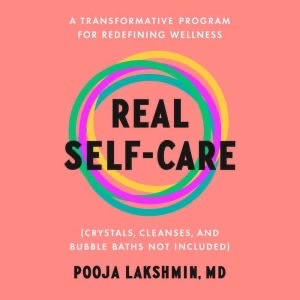
One of my favorite new books focused on self care is Real self care by Pooja Lakshmin. If you’ve heard/seen me speak, or read my book, you know my ambivalence about self-care. It’s essential, but… I mentioned one of Lakshmi’s strategies at my talk at the LJ & SLJ public library youth services leadership summit in March, which I’ll expand on soon.
Taking care of ourselves is vital. Otherwise, we cannot help others, whether those are family, friends, colleagues, or our communities. Corporations are cashing in on self-care as the newest money-making wellness craze. Anything to make a dollar, right? The global wellness industries targeting women was valued at $4.4 trillion in 2020. And, instead of improving working conditions and organizational behaviors, as well as committing to systemic changes to upset the dominant paradigm, many workplaces don’t acknowledge their role in creating toxic cultures. Institutions/organizations escape accountability for their actions (or non-actions) by promoting wellness and self-care to their workers, without backing up their theatrics with actual changes like flexible work, subsidized support for caregivers, or safe/brave spaces where we can calm down after anxiety attacks in the workplace. And self-care is something we do on our own time, at home, to recover from the daily indignities, betrayals, micromanagement, micro aggressions, and other fun things happening to us in our workplaces.
Lakshmin says that real self-care is “radical work.” And she provides a healthy framework for crafting an individualized approach to your self care. She says that self-care that is not aligned with our personal values does us harm. Her program requires us getting real about our values and priorities.
She wrote: “…our true selves are located in our daily choices , and when you use faux self-care as a coping method for escape, you don’t have to make any real world decisions at all.” Escapist self care isn’t healthy. It’s a short term solution that doesn’t promote growth, healing, resilience (another concept I’m ambivalent about).
If human touch is highly valued, then a monthly massage aligns with your values, and hence, is a solid way to restore your mind, body, and spirit. If you’re sensually oriented, then having aromas of lavender, bergamot, and/or lemon wafting through your space jibes with your values. Lakshmin proposes that when we thoughtlessly pursue self-care activities that don’t mesh with our priorities, then we’re sabotaging ourselves.
Those aren’t even the best parts of her work. She talk about how looking for hacks and shortcuts to give us more time isn’t useful when we use those extra minutes or hours to add more work to our plates. We’re not resting enough. Doing nothing enough. She indicts the “American Dream,” patriarchy, white supremacy, and capitalism as elements contributing to our experiences of burnout, overwhelm, and mental illness.
Something I emphasize in my presentations about trauma-informed and trauma-responsive libraries are boundaries as self-care. This is not a new notion, but it’s something I arrived at by talking with other librarians about how to do this work well, without letting the emotional labor and invisible labor kill us. Saying no is a great boundary, but not one that many of us have agency to use as a definitive response to bosses, managers, employers, clients, etc. Lakshmin offers a solid alternative, the pause.
“Your boundary is in your pause– you can say yes, you can say no, or you can negotiate.” This practice disrupts our good girl/good boy cultural programming to say yes to everything and extend our energy beyond our capabilities.
I hope my review sold you on reading this book. It’s perfect for those just learning about self-care because it may set you on a healthy part from the start. And it’s perfect for those of us who’ve read dozens of self-care/self-help books because Lakshmin’s suggestions are sharp and effective.



















 Rebecca Tolley