One of my long-standing and favorite professional practices is reading books, reviewing them, and having those reviews published. I’ve dozens on my CV, and while I’m a full professor with no real need to continue “publishing” I can’t stop with the book reviewing because it’s so important as a professional practice.
And when I spoke at the Library Marketing Conference this month I mentioned ACRL’s cultural competence values as a way that the DEIA piece aligned with the sixth trauma-informed framework principle: cultural, historical, and gender issues, but actually regret doing that because now I’d change that to cultural humility. I’m not steeped in the ACRL framework like some college/university librarians are; just peripherally aware.
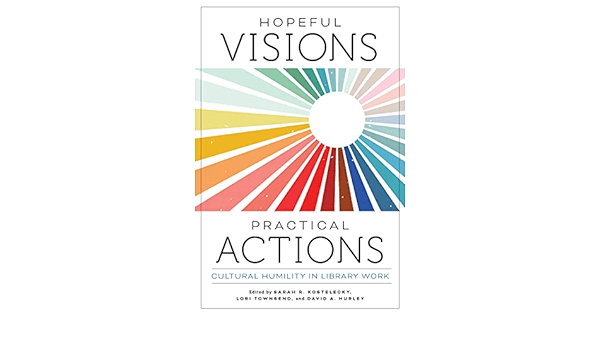
I learned from the book that cultural competence fails to analyze structural and institutional roles and hold them accountable for harm. Clearly, cultural humility promotes that essential component of structural and institutional accountability.
Cultural humility aligns perfectly with the sixth trauma-informed principle.
There are three or four main points to cultural humility:
don’t be defensive
recognize other pespectives
practice critical self-reflection
hold institutions accountable
Anyway, I’m excited that I know this concept and will incorporate it into my learning, practice, and presentations. While referencing the sixth principle I talk about things like segregated libraries in the Jim Crow South, Native American Boarding Schools and their deployment of education for cultural genocide, library buildings being named for white men (sometimes enslavers) as reasons why people mistrust institutions, including libraries. On a more positive note, I stress the way that libraries serve as sanctuary for LGBTQIA+, immigrants, the unhoused, etc.
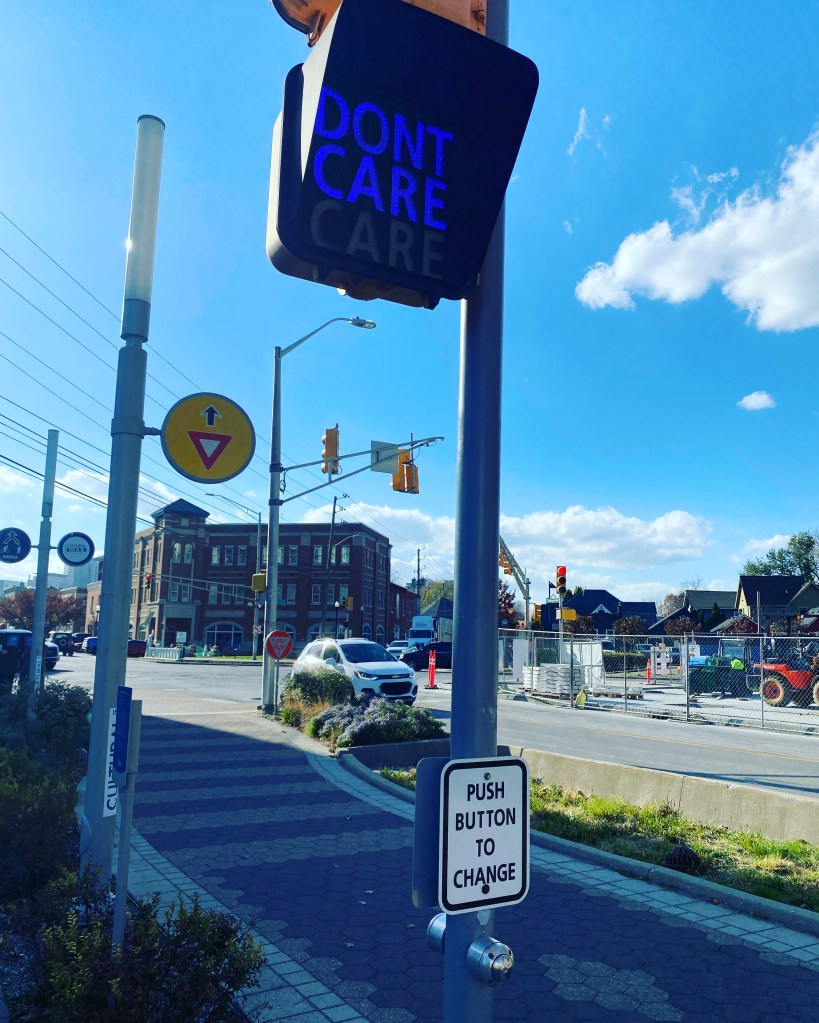
Last week I presented at the Library Marketing Conference in Indianapolis, IN on using the trauma-informed framework as a strategy for libraries’ marketing and communication practices.
It’s an area I omitted, accidentally, from my book, which now seems like a terrible oversight since I worked for five years as my academic library’s marketing and communications librarian. And yet, it seems that many people working in library marketing and communications are coming around to empathy, kindness, and care, without the trauma-informed framework.
That was delightful. So I confessed to my audience that I didn’t think I’d tell them anything they didn’t already know. But presented the six principles as a checklist of sorts that they could use in their crisis communications.
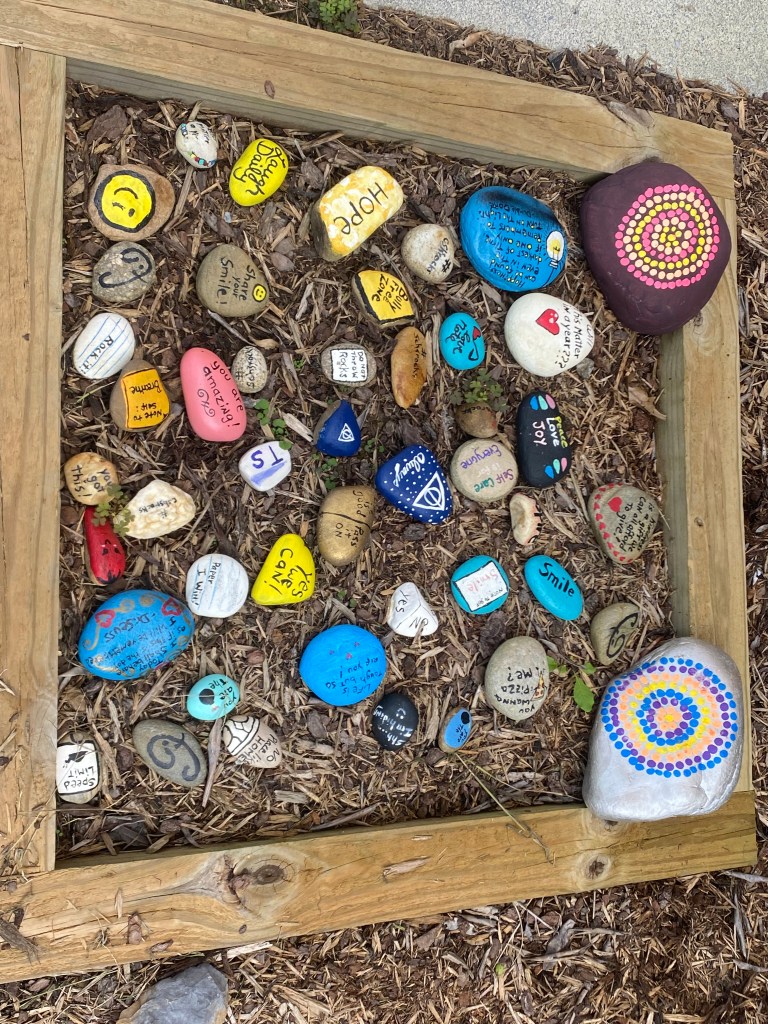
Painted rocks outside Clemmer College of Education, East Tennessee State University, Johnson City, TN
Many people realize that we’ve had a rough few years/decades/centuries; that now is a time for kindness and caring for each other.
After my presentation a person approached me and we spoke about how it the empathy vs. tough love binary seems like one of the divisions our country experiences. While it’s certainly not as simple as some people have empathy and some tell others to “suck it up and move on,” sometimes it feels that way. How do we get perceptions round vulnerability and strength to widen?
When I speak about trauma-informed/trauma-responsive library services I mention cognitive dissonance when it comes to library security and/or law enforcement presence in libraries. I’m white. Seeing armed cops patrol my public library unsettles me. I’m on the fence about having security guards babysitting empty academic libraries, too.
However, many library workers experience threats, harassment, bullying, and other kinds of violent behavior from those whom they serve. Library workers often want security/law enforcement in the building because that’s not our job.
Interestingly, it WAS. Historically librarians were hired to curate and discipline those who didn’t follow rules. They were hired to enforce white supremacy in the white institutionalized library.
Yet, a lot of library workers’ workflow is interrupted by having to de-escalate situations, curb unacceptable behavior, and surveil the people using their spaces and collections to monitor how well everyone abides by rules.
Many people we support are black and brown people whose bodies and lives are surveilled. They worry about whether they’ll survive a “routine traffic stop.”
Holding two conflicting ideas takes a mental toll on our well-being. Library workers need to feel safe. Library users need to feel safe. Those are similar ideas, but safety means different things to different people.
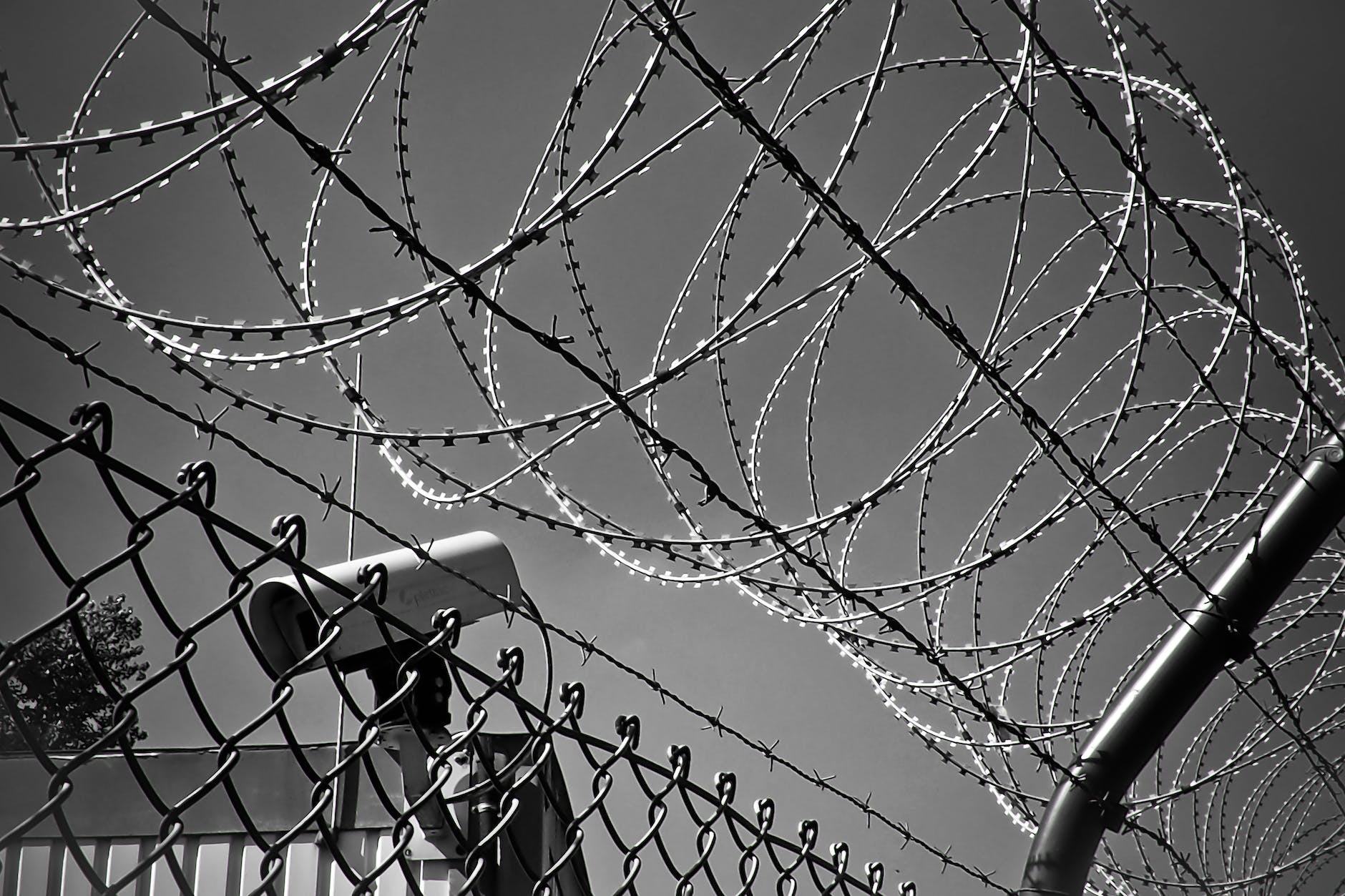
For some weeks now I’ve thought about the cognitive dissonance felt by prison librarians. Our professional ethics stress the right to information, the freedom of speech, and anti-censorship. Yet, prison librarians must balance those professional ethics with what their employer–a department of corrections, prison, juvenile detention center, etc.–deems a security risk. Information is restricted for prisoners, but SCOTUS guarantees their right to access of the courts, which is usually interpreted as access to a law library.
Seemingly, there isn’t much we can do to resolve cognitive dissonance. Recognizing the conflict and accepting that it’s there is it. That’s part of Acceptance and Commitment Therapy. Just noticing the conflicting ideas when they pop up, and not judging them. It’s difficult. I want to solve problems, but some days I just notice and let those ideas float on. That’s some improvement over the dismay of learned helplessness, right?
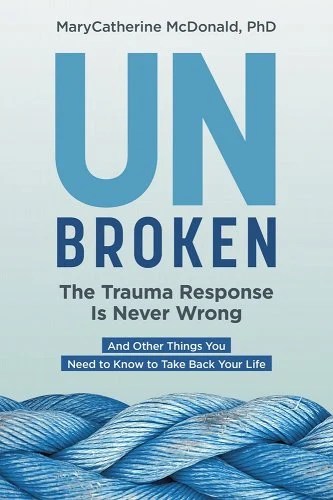
Reading is something I do for leisure, for escape, and for continuing education. Since my work in trauma-informed libraries is SO trauma-focused, keeping abreast of what experts in the field publish is essential so that I can share the latest trends with my audiences.
If you’re new to reading about trauma, this is THE book for you. If you’re a trauma sage, McDonald offers a few novel ways of thinking about trauma and its role in our lives. New to me, at least, and since I’m a general audience, this is chockablock full of great information that can help us heal and be kinder to ourselves.
Early on she wrote: “undo what you think you know about trauma and replace it with what we know to be true.”
Whether it’s our religion, our culture, our workplace, or our biological families, we’re taught that we’re broken, that trauma breaks us and that we’re sad broken people, living sad broken lives, just barely coping because of all our triggers and symptoms.
WRONG. McDonald provides a healthy vision normalizing trauma. Our systems go off when we’re in emergency mode, and then they “toggle off,” McDonald wrote, if we have someone to help us retrain our nervous systems. But if we don’t have help toggling off, then we’re chronically feeling in danger, living inside a “never-ending feedback loop.”
She reframes the trauma response as as weakness to being rooted in strength. We are not weak. We are not dysfunctional. One component she discusses is moral injury as a component in the trauma experience. We’re haunted by the moral injury that accompanies trauma. McDonald says that you feel you have failed morally or your moral structures failed you. When this happens, you develop an inability to trust yourself or others. This is why safety is the number one principle/pillar in the TI Framework. Restoring our safety is essential for future health and wellness.
Triggers are about survival. Sometimes they’re so deeply within us, that we’re unaware they exist. She wrote “…triggers do not exist to remind us of what we should avoid. They exist so we do not forget, so that we integrate what has so far gone unintegrated. They are signs that there are things that we have not yet processed, sings there is work to be done.”
I had an aha moment while reading this book. In 1991 I was sexually assaulted. I repressed this knowledge for 20 years. Repression/suppression is my go-to coping method, as is disassociation. Immediately after, in 1991-1992, other than some “acting out” with binge drinking and casual sex, I was fine. A few months after being sexually assaulted I stayed with a classmate over the holiday break and played Tetris on her Nintendo for hours at a time. McDonald wrote: “Playing Tetris on your phone is a therapeutic tool.” Reader, I healed myself. Studies show that Tetris is “an effective adjunctive therapy for PTSD. It can mitigate intrusive memories and thoughts, potentially to help prevent the development… Studies suggest that playing the game for 20-60 minutes a day can lower your baseline anxiety level.” The study is by Oisin Butler et al.
She reminded me that we are both harmed and healed through relationships. This is key to why I wrote my book. Library workers– kind, caring, empathetic library workers– can heal with our stabilizing presence in someone’s life. McDonald mentioned “the first-grade teacher who remind you every day that you belong can counter the fact that you feel like your only job at home is to be invisible.” Her next example is the “bus driver who always shows up at the exact time with a smile on her face,” reminds us that reliability exists. Yeah, yeah, job creep. Not all librarians are reliable. Many are.
This is powerful: “the truth is, we all hold the keys to someone’s relational home.”
I could end on that, but there are two more things:
One, McDonald described how the pandemic and staying at home shut down her life (and ours too), but that the gift in that was that she had time to learn new hobbies. She acknowledges her privilege by reminding readers that not everyone had/has the luxury, the free time, the energy to try and sustain hobbies. Hobbies require input from working memory. When we’re triggered, this part of the brain isn’t operative. If we can cultivate working memory, we can “restore relative homeostasis to the brain.” She reminded me that some hobbies help us complete the stress cycle that we don’t learn to complete.
And two: tiny joys. This aligns with what we know about gratitude. Lots of advice abounds about counting gratitude as a practice to help us slow down and appreciate what positives exist in our lives instead of ruminating on what someone did to us at work that day. McDonald suggested we think the solution to a big problem is a big solution. But we’re wrong. Little joys do the trick.
This is beautiful: “Joy is an anchor-heavy, solid, reliable. It sinks to the ocean floor and tethers us so we are not unmoored but can only wander so far.”
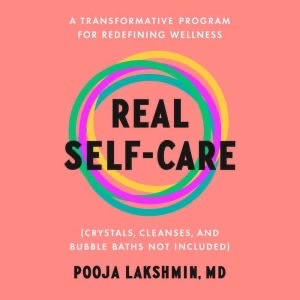
One of my favorite new books focused on self care is Real self care by Pooja Lakshmin. If you’ve heard/seen me speak, or read my book, you know my ambivalence about self-care. It’s essential, but… I mentioned one of Lakshmi’s strategies at my talk at the LJ & SLJ public library youth services leadership summit in March, which I’ll expand on soon.
Taking care of ourselves is vital. Otherwise, we cannot help others, whether those are family, friends, colleagues, or our communities. Corporations are cashing in on self-care as the newest money-making wellness craze. Anything to make a dollar, right? The global wellness industries targeting women was valued at $4.4 trillion in 2020. And, instead of improving working conditions and organizational behaviors, as well as committing to systemic changes to upset the dominant paradigm, many workplaces don’t acknowledge their role in creating toxic cultures. Institutions/organizations escape accountability for their actions (or non-actions) by promoting wellness and self-care to their workers, without backing up their theatrics with actual changes like flexible work, subsidized support for caregivers, or safe/brave spaces where we can calm down after anxiety attacks in the workplace. And self-care is something we do on our own time, at home, to recover from the daily indignities, betrayals, micromanagement, micro aggressions, and other fun things happening to us in our workplaces.
Lakshmin says that real self-care is “radical work.” And she provides a healthy framework for crafting an individualized approach to your self care. She says that self-care that is not aligned with our personal values does us harm. Her program requires us getting real about our values and priorities.
She wrote: “…our true selves are located in our daily choices , and when you use faux self-care as a coping method for escape, you don’t have to make any real world decisions at all.” Escapist self care isn’t healthy. It’s a short term solution that doesn’t promote growth, healing, resilience (another concept I’m ambivalent about).
If human touch is highly valued, then a monthly massage aligns with your values, and hence, is a solid way to restore your mind, body, and spirit. If you’re sensually oriented, then having aromas of lavender, bergamot, and/or lemon wafting through your space jibes with your values. Lakshmin proposes that when we thoughtlessly pursue self-care activities that don’t mesh with our priorities, then we’re sabotaging ourselves.
Those aren’t even the best parts of her work. She talk about how looking for hacks and shortcuts to give us more time isn’t useful when we use those extra minutes or hours to add more work to our plates. We’re not resting enough. Doing nothing enough. She indicts the “American Dream,” patriarchy, white supremacy, and capitalism as elements contributing to our experiences of burnout, overwhelm, and mental illness.
Something I emphasize in my presentations about trauma-informed and trauma-responsive libraries are boundaries as self-care. This is not a new notion, but it’s something I arrived at by talking with other librarians about how to do this work well, without letting the emotional labor and invisible labor kill us. Saying no is a great boundary, but not one that many of us have agency to use as a definitive response to bosses, managers, employers, clients, etc. Lakshmin offers a solid alternative, the pause.
“Your boundary is in your pause– you can say yes, you can say no, or you can negotiate.” This practice disrupts our good girl/good boy cultural programming to say yes to everything and extend our energy beyond our capabilities.
I hope my review sold you on reading this book. It’s perfect for those just learning about self-care because it may set you on a healthy part from the start. And it’s perfect for those of us who’ve read dozens of self-care/self-help books because Lakshmin’s suggestions are sharp and effective.
Spending 24 hours in Broward County, FL (Ft. Lauderdale) last week with library workers serving youth was my honor. I spoke for about an hour and answered questions about mental illness and how the trauma-informed framework provides guidance for supporting America’s youth and their mental illness issues.
My list of resources I referenced for the talk included (NOT in alphabetical order):






 Rebecca Tolley